
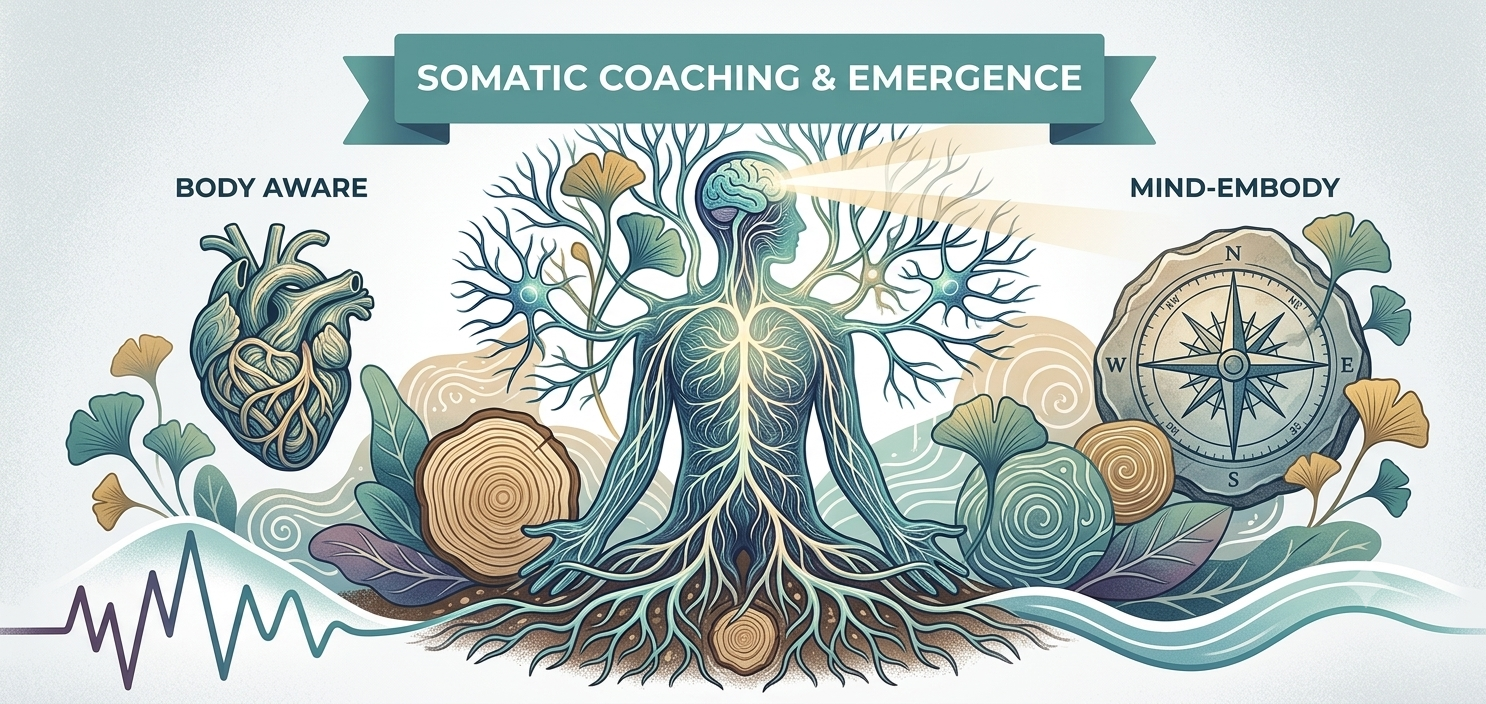
Somatic coaching focuses on working with the body as well as the mind. It integrates body awareness, nervous system regulation, and mindset work so that change is not only understood conceptually but also experienced and embodied. When the body is included in this way, clients do not simply think differently; they consistently behave and respond differently in daily life.
Many people experience ongoing fatigue, heightened alertness, and a tendency to push through stress. Over the course of the year, stress, burnout, and digital overload can accumulate. Deep nervous system work offers an additional pathway that supports calm, clarity, and sustainable resilience. This article outlines what somatic coaching certification is, why it matters, and how it fits into the wider transformation work taught within an integrated training ecosystem.
Somatic Coaching for a Regulated, Resilient Life
Rather than asking clients to rely solely on cognitive strategies to manage stress, somatic coaching helps them:
- Notice what their body is doing in the moment
- Use breath, movement, and focused awareness to support nervous system regulation
- Integrate mindset tools with body-based practices so that change is more durable
This approach is especially relevant in contexts where individuals are living in a near-constant state of alert. Long work hours, extensive screen use, and ongoing emotional demands can pull the nervous system into fight, flight, or freeze responses. A comprehensive somatic coaching certification trains professionals to support clients in moving from chronic coping and numbing toward regulation, resilience, and embodied leadership. When grounded in evidence-based mind-body methods, this work can be both deeply transformational and professionally responsible.
Why the Nervous System Is a Key Link in Coaching
The autonomic nervous system operates largely outside conscious awareness, influencing whether a person feels safe enough to rest or compelled to protect themselves. When the system leans toward a perception of danger, common patterns include:
- Freezing or shutting down when pressure increases
- People-pleasing to avoid conflict
- Overachieving to maintain a sense of worth
- Rapid emotional reactions that feel difficult to manage
Traditional mindset-focused coaching often concentrates on thoughts, beliefs, and goals. While valuable, this approach can be limited if the body remains braced for threat. In such cases, a client may intellectually understand an insight yet still feel unable to change their responses. Nervous system-informed coaching considers somatic triggers and stored stress alongside cognitive stories and logic.
Key concepts include safety, capacity, and regulation. Safety refers to a felt sense that it is acceptable to relax. Capacity describes how much emotional and situational load a person can hold without tipping into overwhelm. Regulation is the ability to return to a centered state after stress. When these foundations are present, clients tend to make clearer decisions, remain more emotionally adaptable, communicate more honestly, and perform more effectively under pressure.
What Makes Somatic Coaching Certification Deep and Robust
Somatic training programs vary in depth and scope. A robust somatic coaching certification is typically built on several pillars.
The first is body-based awareness. Coaches learn to guide clients to notice sensations, breathing patterns, movement, and subtle shifts without pushing or forcing the process. The second is trauma sensitivity. While coaches do not replace therapists, it is important that they understand how past stress can manifest in the body and how to avoid re-triggering clients. The third is a clear foundation in nervous system education so that the theory behind tools and techniques is well understood.
Depth is also influenced by how the training is delivered, not only by what is taught. High-quality programs commonly include:
- Practice-based learning, not only lectures
- Supervised sessions with feedback on presence, pacing, and attunement
- Time and support for integrating the work into the coach’s own body and practice
Some advanced programs integrate somatic work with disciplines such as NLP, hypnotherapy, and behavioral change methodologies. This allows coaches to address patterns at multiple levels: conscious mind, subconscious processes, behavior, and bodily response. Ethical practice, informed consent, clear scope of practice, and careful integration of somatic tools into existing coaching frameworks are also essential components.
Inside a Somatic Pathway Within an Integrated Training Ecosystem
In a comprehensive training environment, somatic coaching is positioned as a core component of transformation rather than a peripheral topic. Somatic practices are connected with NLP models, coaching skills, hypnotherapy approaches, and behavioral change frameworks to provide a more complete understanding of how mind and body interact.
Key learning components often include:
- Experiential somatic practices that participants explore in their own bodies
- Practical regulation tools that clients can use between sessions
- Embodied communication skills, including how posture, tone, and presence influence perceptions of safety
- Client assessment skills to recognize early signs of shutdown, overload, or dysregulation
A typical learning path may involve live training, peer practice circles, supervised sessions, and structured integration work between modules. Ongoing reflection is built in so that learning moves beyond theory into embodied skill. Participants frequently come from a range of regions, industries, and organizational cultures, and the underlying nervous system principles can be adapted across these varied contexts. Leaders, therapists, coaches, HR professionals, and other practitioners can all incorporate this work into their professional setting.
Skills Developed Through Somatic Coaching Certification
A well-designed somatic coaching certification equips practitioners with practical tools that can be applied immediately. Core nervous system skills may include:
- Grounding: supporting clients to sense their body, weight, and connection to the present moment
- Orienting: gently noticing the surrounding environment to signal relative safety to the brain
- Titration: working with manageable doses of emotion or activation rather than confronting everything at once
- Pendulation: guiding attention between areas of stress and areas of ease to gradually build capacity
- Resourcing: identifying and strengthening internal and external supports that help the system settle
Graduates also learn to observe somatic indicators such as changes in posture, breath patterns, subtle tension in the jaw or hands, and shifts in energy or engagement. These signals can inform more precise and responsive coaching interventions. Session design often evolves as well: instead of pushing clients through resistance, coaches learn to pace the work, respect capacity, and build safety incrementally.
This skill set can support burnout prevention, strengthen leadership presence, improve the quality of difficult conversations, and foster steadier emotional regulation in high-stakes environments such as boardrooms, clinical settings, or sensitive HR meetings.
Choosing the Right Somatic Coaching Certification
When considering somatic training, it is useful to evaluate several key factors:
- Faculty experience in both somatic and coaching disciplines
- Clear theoretical foundations rather than purely trend-driven language
- Meaningful practice hours, supervision, and constructive feedback
- Alignment with recognized ethical standards and an appropriate scope of practice
There is a meaningful difference between a brief somatic overview and a program that centers nervous system work as a core professional skill. It is also important to consider how the approach aligns with your background and context, whether you work primarily in coaching, therapy, leadership, or organizational development.
The middle of the year can be an effective time to invest in this type of training. Energy and resources may already feel stretched, and the second half of the year often brings additional demands. Building nervous system literacy at this stage can support both practitioners and their clients as pressures increase.
Developing somatic mastery is not only about supporting others. Through this training, practitioners also learn to track their own stress responses, settle their bodies, and lead from a more grounded, regulated place. When somatic coaching is integrated with disciplines such as NLP, hypnotherapy, and behavioral re-engineering within a coherent framework, it can support real, embodied change. Including the body in coaching work in this way helps clients feel more at ease in their own experience and enables practitioners to hold deeper, more stable, and more transformative spaces for growth.
Advance Your Coaching Practice With Embodied NLP Skills
If you are ready to integrate the body, emotions, and mind into your work, our somatic coaching certification is the next step. At Arslan Larik and Company, we help you build practical, embodied tools you can use with clients right away. Explore how this training fits your goals and reach out with any questions through our contact page.