
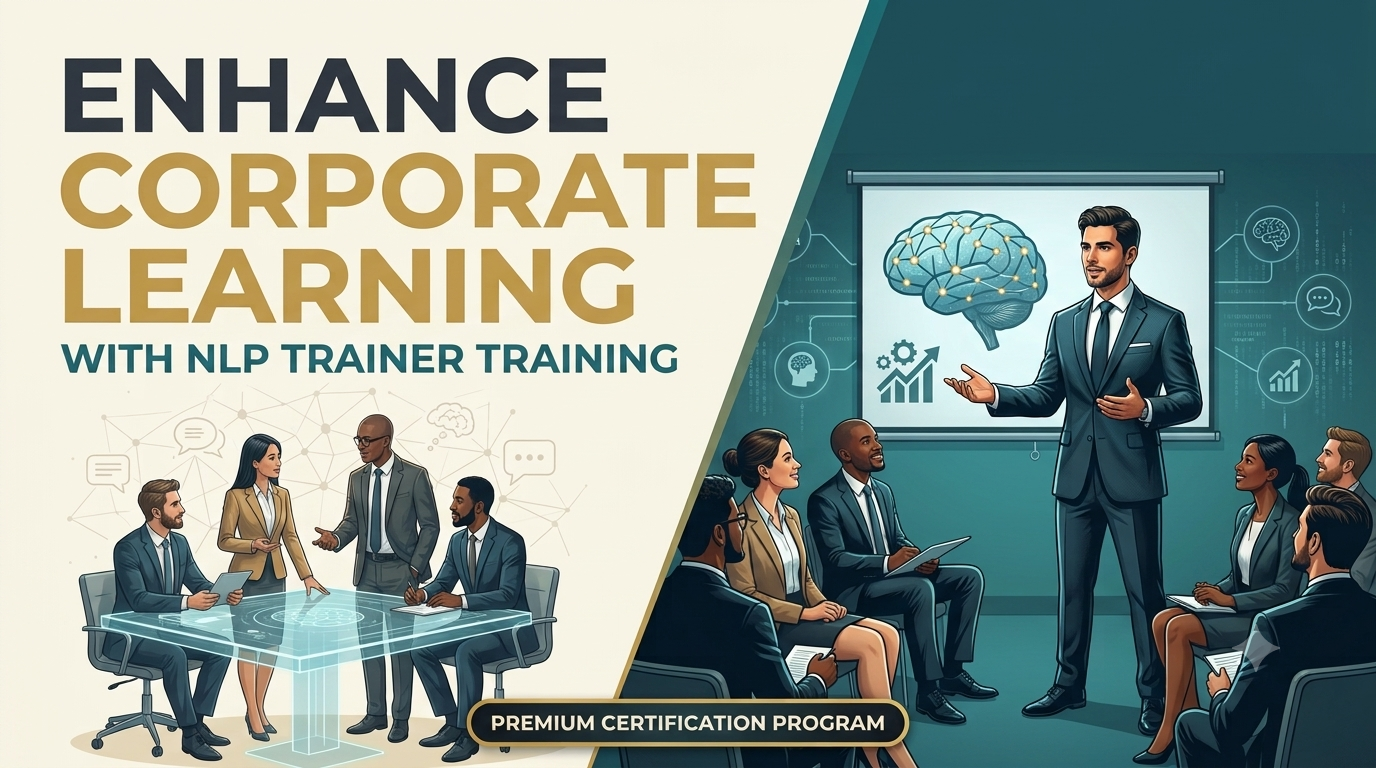
Transforming Corporate Learning Into a Strategic Advantage
Corporate training is intended to change how people think, act, and perform. However, many programs still take the form of lengthy slide presentations, passive participation, and minimal observable change once participants return to their roles. This gap often becomes especially visible after mid‑year reviews, when leaders recognize that the same issues continue to appear in meetings, sales discussions, and team interactions.
NLP trainer training offers an alternative approach. Rather than focusing solely on content, it emphasizes how people actually think, feel, and communicate. It integrates psychology, language, and behavior so that learning is designed in line with how the human brain works, not only with what the organization wishes to communicate. For organizations seeking to position learning as a strategic advantage, this shift is significant.
At Arslan Larik & Company, headquartered in Pakistan and serving clients globally, the focus is on NLP, hypnotherapy, and transformational coaching certifications. The firm supports leaders and learning teams in developing corporate training that is aligned with human behavior, business objectives, and sustainable change, rather than one‑off training events.
Why Organizations Are Turning to NLP Trainer Training
Many organizations are examining a core question: why does so much training fail to produce lasting impact? The answer frequently lies in how individuals process information. NLP trainer training helps internal trainers, HR professionals, and learning leaders understand the mental filters and patterns their people use every day. As a result, internal specialists become better prepared to work with attention, comprehension, and engagement in a way that supports real‑world performance.
Through NLP trainer training, internal specialists are equipped to:
- Recognize different learning styles and attention patterns
- Structure content so it is easier to absorb, retain, and apply
- Use language that reduces ambiguity and increases clarity
- Create learning environments where participants are focused, receptive, and engaged
When training is aligned with how people think and learn, several outcomes typically improve:
- Sustained engagement, even in extended sessions
- Reduced training fatigue, as sessions feel relevant and purposeful
- Increased on‑the‑job application of skills
- Closer alignment between training outcomes and performance indicators
The middle of the year is a natural checkpoint. Around July, many organizations review what has worked in the first half of the year, where teams are experiencing challenges, and what must change for the remainder of the year. This moment often prompts leaders and learning teams to revisit the effectiveness of training and clarify what needs to be redesigned or reinforced going forward.
This is an appropriate moment to consider:
- Which training initiatives led to observable behavior change?
- Where was there a clear performance impact?
- How can the H2 learning roadmap be redesigned using NLP‑based approaches?
By integrating NLP trainer training into this planning cycle, organizations can recalibrate their learning strategies and build the second half of the year on a stronger, evidence‑based foundation.
Core NLP Trainer Training Competencies for Corporate Impact
NLP trainer training develops a set of core capabilities that are particularly valuable in corporate environments. These extend well beyond presentation techniques and influence how trainers think about people, learning, and performance. In practice, the competencies strengthen clarity, adaptability, and the ability to translate high-performance behaviors into teachable steps.
Key competencies include:
- Advanced communication skills, ensuring messages are clearly understood by diverse audiences
- Modeling excellence, so high performance within the organization can be translated into teachable, repeatable steps
- State management, enabling trainers and learners to remain resourceful and composed under pressure
- Precision questioning, to move beyond surface‑level responses and uncover underlying issues
In a corporate context, these competencies show up in how internal trainers handle real situations in the room. They are more capable of meeting resistance constructively, reading group dynamics as they unfold, and keeping longer sessions structured and energized while making complex topics easier to grasp.
In a corporate context, this means internal trainers are better able to:
- Address resistance in a calm, respectful, and constructive manner
- Observe and respond to group dynamics in real time
- Simplify complex technical or behavioral topics into clear, accessible explanations
- Maintain energy, focus, and structure throughout longer sessions
When NLP is combined with hypnotherapy and transformational coaching, trainers gain deeper tools for working with mindset and belief systems. This allows them to work not only on skills and processes, but also on the internal narratives that shape confidence, follow‑through, and openness to feedback, especially under pressure or during rapid change
They can:
- Identify limiting beliefs that quietly constrain performance
- Support individuals in creating more constructive internal narratives about change, targets, and feedback
- Assist teams in navigating stress, pressure, and rapid organizational shifts
This combination helps elevate the training function from basic knowledge transfer to a driver of meaningful performance shifts.
Designing Corporate Training That Leads to Behavior Change
Content alone is insufficient. The way training is designed and delivered determines whether it produces measurable behavior change. NLP‑based design principles support a move away from information‑heavy sessions toward structured learning experiences that the brain more naturally retains. Rather than prioritizing volume of material, the emphasis shifts toward clarity of outcomes, relevance to daily work, and reinforcement that helps learning stick.
An NLP‑informed training design often includes:
- Clear, outcome‑focused planning: starting with specific, observable behaviors and success criteria
- Targeted storytelling: concise, relevant narratives that connect concepts to daily work
- Sensory‑rich demonstrations: using visuals, sound, and practical examples to reinforce key points
- Strategic language patterns: wording that supports psychological safety, learning, and ownership
For example, instead of relying on a lengthy slide presentation on leadership, an NLP‑trained facilitator might structure the session so participants recognize the issues in context, practice realistic responses, and leave with commitments they have generated themselves.
An NLP‑trained facilitator might:
- Open with a brief, relatable case example of a challenging leadership situation
- Invite participants to reflect on comparable experiences from their own roles
- Conduct practical role‑plays that mirror typical meetings or client conversations
- Use structured questioning to help participants generate their own solutions and commitments
When training is designed in this way, it more directly supports business outcomes because the learning experience is closer to real work conditions and decision points. As a result, capability development becomes easier to track and more likely to translate into measurable performance improvements.
When training is designed in this way, it more directly supports business outcomes such as:
- Stronger leadership pipelines, as participants practice realistic scenarios and decision‑making
- More resilient teams, particularly during peak workload periods and organizational change
- Enhanced sales and customer interactions, through improved listening and questioning skills
- Higher engagement, as learning is clearly connected to current challenges rather than abstract theory
Integrating NLP Trainer Training Into the Learning Strategy
NLP trainer training is most effective when it is integrated into a broader learning and talent strategy, rather than treated as an isolated initiative. Organizations can embed it into how they develop people at multiple levels, creating consistency in facilitation, coaching, and the language used to drive performance and culture.
Common approaches to integrating NLP trainer training include:
- Upskilling internal trainers who already deliver onboarding, leadership, or functional programs
- Equipping HR and L&D teams with shared tools and language for coaching, feedback, and facilitation
- Designing signature leadership or talent development academies that apply NLP principles end‑to‑end
- Establishing internal mentoring and coaching frameworks supported by NLP‑based skills
Given that many organizations operate across regions and time zones, flexible delivery models are essential. The goal is to maintain quality and continuity while accommodating different schedules, business cycles, and geographic realities.
NLP trainer training can be delivered in several formats, such as:
- In‑house trainer certification for key members of the training or people development teams
- Blended learning cohorts combining live sessions with structured self‑study
- Global virtual programs aligned with fiscal calendars and major project cycles
Over time, the objective is to build an internal ecosystem of NLP‑trained facilitators and coaches. These professionals do more than deliver workshops; they help keep conversations, projects, and culture aligned with the mindsets and behaviors the organization seeks to reinforce.
This is the space in which Arslan Larik & Company operates. From its base in Pakistan, with a global perspective, the firm partners with organizations that are ready to position learning as a strategic lever and transform training from a support function into a consistent engine for people and performance transformation.
Advance Your Coaching Impact With Proven NLP Trainer Skills
If you are ready to lead transformative learning experiences with confidence, our NLP trainer training is designed to give you the tools, structure, and practice you need. At Arslan Larik and Company, we help you move beyond theory so you can design and deliver trainings that truly land with your audience. Reach out to our team to explore whether this program is the right next step for you, or contact us to discuss your goals in detail.