
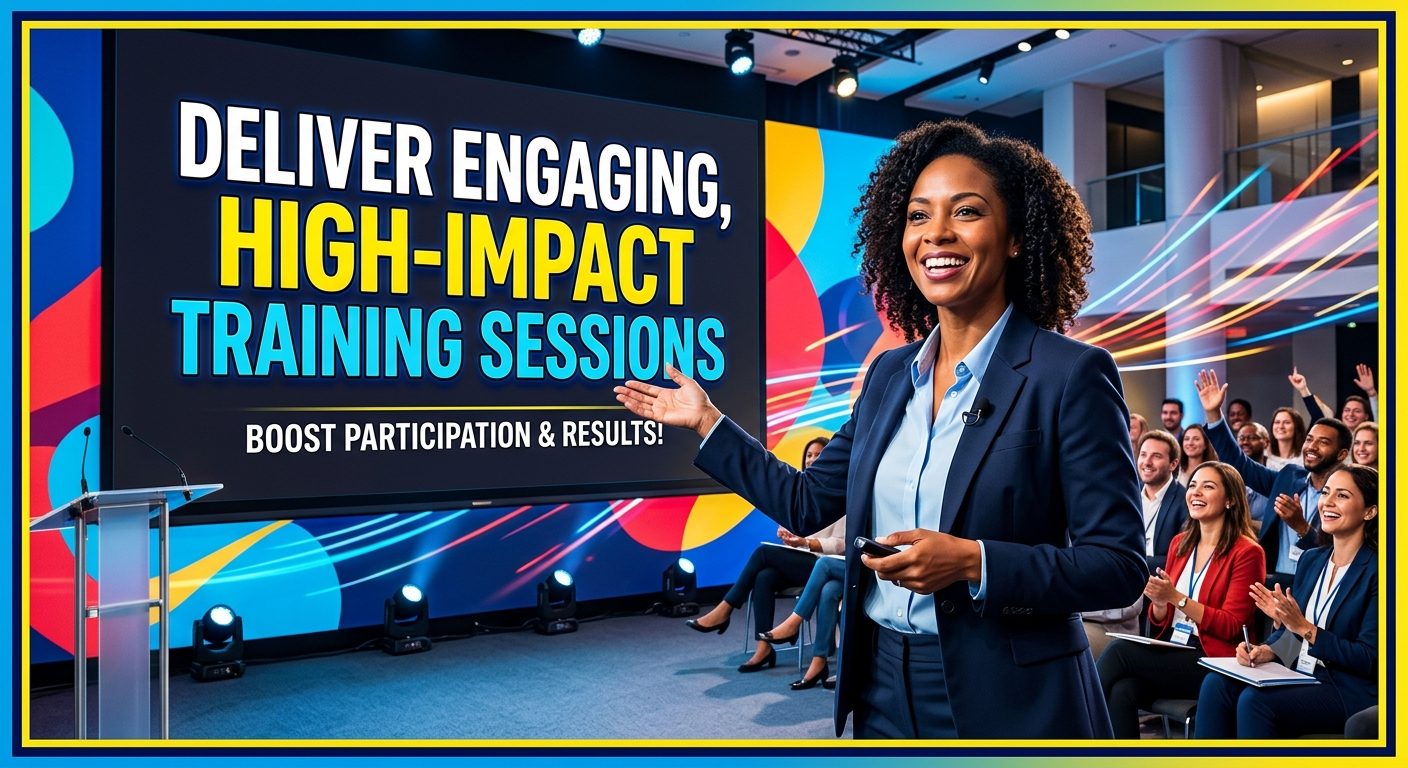
How to Deliver High-Impact Training That Keeps Everyone Engaged
High-impact training is not about compressing as much information as possible into a single day. It is about guiding people into new ways of thinking, feeling, and behaving so clearly that change becomes highly likely. When trainers focus only on slides and content, they often disengage participants, even when they are experts in their subject matter.
At Arslan Larik and Company, we focus on what actually shifts people: state management, intention, connection, and clear structure. In this article, we outline how to design and deliver sessions aligned with how the human brain works, read the room with the precision developed through NLP trainer training, communicate with impact, handle resistance constructively, and create lasting behavior change rather than a short-lived burst of inspiration.
Design Around the Human Brain, Not the Slide Deck
Effective training starts long before anyone enters the room. A common mistake is building a session around topics instead of transformation.
Begin with outcomes that are behavioral, not abstract. Ask yourself, by the end of this training, what do you want people to:
- Do differently in their day-to-day work or life
- Say differently in conversations or meetings
- Decide differently when faced with real choices
Once those outcomes are clear, reverse-engineer your content. Instead of asking, “What can I share?” ask, “What is essential for them to achieve these outcomes?” This naturally removes nonessential material and preserves only what supports real change.
Then, design for attention, not just information. People absorb learning in short, focused bursts, so:
- Break content into compact segments, each with a clear purpose
- Signal transitions so the brain recognises that a new “chapter” is starting
- Alternate formats: brief input, reflection, pair work, small group discussion, and practical demonstration
Micro-activities are especially effective. A focused question, a brief “turn to the person next to you” exchange, or a 2-minute written reflection at regular intervals keeps participants mentally present instead of passively listening.
Finally, integrate emotion into the design. Our brains prioritise what feels personally relevant, so:
- Open with a real problem your participants recognise, rather than with your agenda
- Use stories and examples from their environment, including the pressures and constraints they face
- Highlight the cost of not changing and the benefits of new behaviours, so motivation comes from within rather than from external pressure
Read the Room and Adjust in Real Time
Even the strongest design requires flexible delivery. This is where principles of NLP trainer training offer a significant advantage, as they help you notice subtle signals that others may miss
Develop your sensory awareness by paying attention to:
- Breathing patterns and shifts in posture
- Where people are looking and how frequently they shift their gaze
- Micro-expressions such as slight frowns, tightened jaws, or disengaged expressions
These small signals indicate whether people are engaged, confused, or starting to disconnect. Compare the overall energy in the room at different points: the start of the session, after breaks, and after key activities. This calibration helps you understand whether engagement is increasing or decreasing.
Manage energy as deliberately as you manage time. Build in intentional “energy checks,” such as:
- A brief stretch or movement break
- A stand-and-talk reflection in pairs
- A short interactive poll or show-of-hands question
Your own voice, pace, and movement also influence the group. If you speak in the same tone and tempo for too long, attention will drift. Vary your rhythm, use clear pauses, and allow key ideas to settle rather than rushing through them.
When attention drops, adapt rather than continuing unchanged. You can:
- Name what you notice in a neutral way: “I notice the energy dipping a bit; let us shift gears.”
- Change the format: move from presentation to discussion, an exercise, or Q&A
- Ask targeted questions such as, “What stands out so far?” or “Where does this feel most challenging to apply?”
Being willing to set aside nonessential content in order to protect attention is one of the defining characteristics of a high-impact trainer.
Communicate with Impact Using NLP-Based Tools
Content is only as effective as the way it is received. NLP-based communication tools help you meet different learners where they are.
To build rapport quickly, align with key aspects of your participants’ communication. This does not mean copying them, but gently matching:
- Posture and general level of movement
- Pace and volume of speech
- Preferred language patterns, whether more visual, auditory, or feeling-based
Respect different processing styles by explaining concepts using:
- Visual language: “Here is what this looks like.”
- Auditory language: “Here is how this sounds in a conversation.”
- Kinesthetic language: “Here is how this feels when you do it.”
Give instructions that are clear the first time. Break them into concise steps:
- What to do
- How long they have
- Who to work with
- What to produce or share at the end
Use positive, specific wording instead of focusing on what not to do. Then, check understanding by asking someone to repeat the instructions in their own words or by running a brief test round.
To make content compelling, apply classic NLP trainer training tools:
- Reframing: when a participant sees an obstacle, help them view it as a learning opportunity
- Future pacing: guide them to mentally rehearse using the new skill in a real upcoming situation
- Anchoring key ideas with consistent metaphors or simple gestures, so they are easier to recall
Handle Resistance and Build Psychological Safety
Resistance in a training room is not something to suppress; it is information to understand. Often it indicates that:
- The pace is too fast or too slow
- The content does not yet feel relevant
- Emotional or psychological safety is missing for some people
Differentiate healthy scepticism from disruptive behaviour. Scepticism often sounds like, “How would this work in our context?” More disruptive patterns can include constant side comments, frequent interruptions, or dominating the space. Respond to both with calm curiosity.
Use active listening before responding. Reflect concerns back so people feel heard, then:
- Acknowledge real constraints instead of dismissing them
- Ask what would make the learning feel more practical or realistic
- Offer choices, for example, “We can apply this to your context or explore another example. Which would be more helpful?”
Protecting psychological safety is essential. Early in the day, establish norms such as:
- Respectful language, even when disagreeing
- Confidentiality around personal stories
- Space for different levels of experience and comfort
Design formats that do not only reward the loudest voices. Small-group work, written reflection, or structured rounds provide quieter participants with opportunities to contribute. If behaviour crosses agreed boundaries, address it respectfully, focusing on the behaviour rather than the person.
Turn a Great Day Into Lasting Change
High-impact training is measured not by applause at the end, but by what people do differently in the following weeks and months. To make learning stick, convert insights into clear commitments.
At the end of each major segment, invite participants to reflect:
- “What is one thing you will do differently because of this?”
- “Where will you apply this first?”
Encourage them to choose one high-leverage behaviour to apply immediately rather than creating an extensive list. Simple templates, checklists, or action plans help bridge the gap between the training room and everyday practice.
Reinforcement is crucial. You can suggest:
- Short review sessions or prompts after the training
- Peer partnerships or small practice groups
- Elements of presentation skills training so participants can confidently share what they have learned with their teams
Finally, continue to develop yourself as a trainer. Ask for structured feedback after each session: what worked, what was unclear, and what could be different next time. Invest in your own NLP trainer training and mindset work so your presence, flexibility, and communication continue to evolve.
When we step into a room as transformational trainers, we are combining thoughtful design, moment-to-moment awareness, and skilful communication. With consistent practice of these skills, it is possible to move beyond simply delivering content and to create sessions that participants remember, apply, and discuss long after the slides have been closed.
Take the Next Step Toward Becoming a Confident NLP Trainer
If you are ready to move from simply using NLP tools to confidently teaching them, our NLP trainer training is designed to help you make that shift. At Arslan Larik and Company, we focus on practical, real-world application so you can lead powerful trainings with clarity and impact. Reach out to contact us and explore how we can support your journey to becoming a skilled and trusted NLP trainer.