
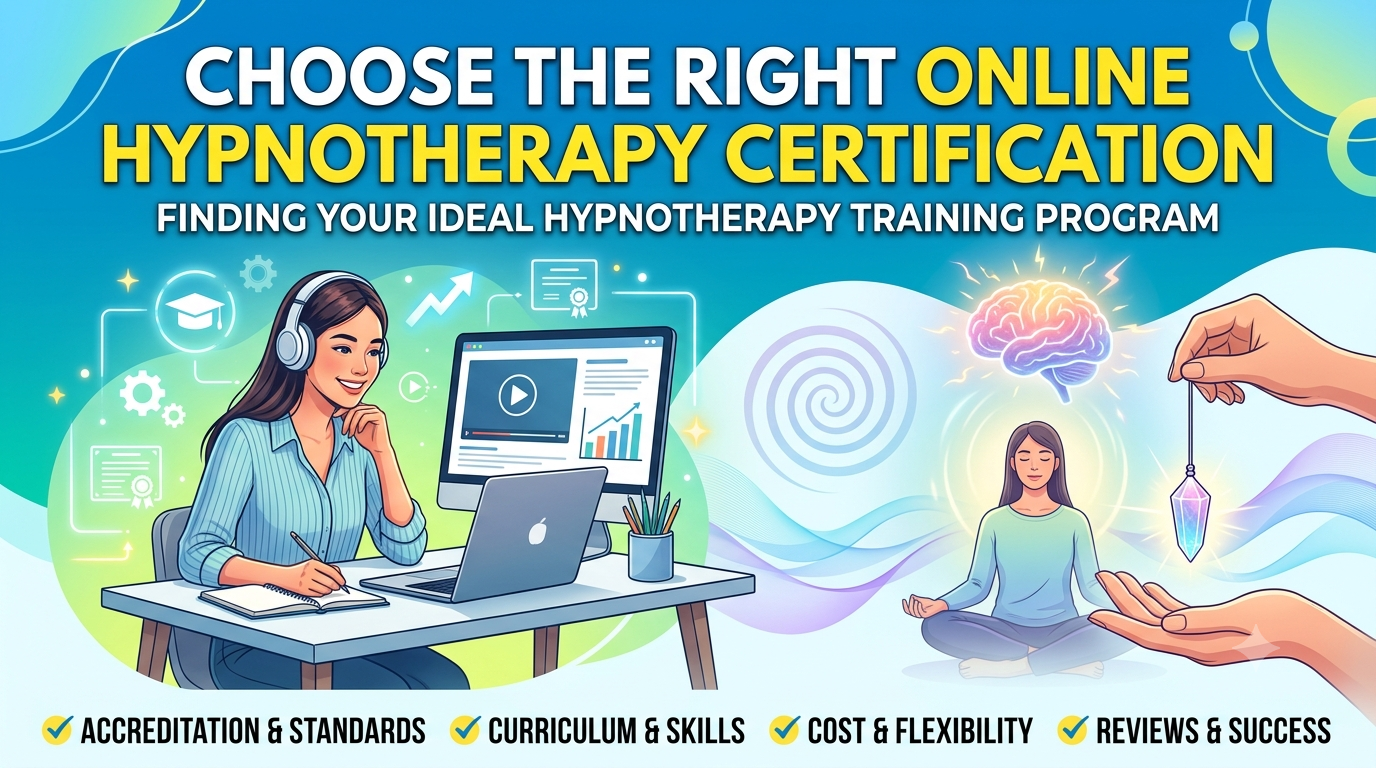
Evaluating Online Hypnotherapy Certification for Serious Practitioners
Online hypnotherapy certification can appear attractive when professionals are planning their next career move around mid-year. It allows continued work with existing clients or within current roles while adding a new area of competence. However, not every online program is designed to prepare practitioners to work safely and effectively with individuals experiencing significant emotional distress.
This article aims to help distinguish short, surface-level courses from training that develops robust, long-term professional capability. As a global mind transformation institute based in Pakistan, we work with coaches, therapists, and trainers who are seeking rigorous training without interrupting their professional commitments. This guide is intended for practitioners who prioritise competence, ethics, and outcomes over the simple accumulation of certificates.
Developing Clinical Skills Before Enrolling
By mid-year, many practitioners review their capabilities and professional direction. They may question whether their current skill set is sufficient for clients presenting with anxiety, trauma histories, or performance-related pressures. Online hypnotherapy certification is often considered as a potential solution, but the quality and depth of available programs vary significantly.
Some courses focus primarily on scripts and attention-grabbing techniques. These can appear engaging yet may not adequately explain the mechanisms underlying unconscious processes or behavioural change. Other programs are structured more like formal professional education, including supervised practice, mentoring, and adherence to recognised standards.
Before enrolling in any program, practitioners should consider whether the training will support the development of a sustainable, ethical practice, or whether it is designed mainly to offer a certificate with limited practical application. A clear review at this stage can prevent later frustration, wasted resources, and uncertainty in client work.
Core Expectations for Serious Professional Training
There is a clear distinction between introductory or hobby-level hypnosis and professional hypnotherapy practice. Short, introductory courses may provide basic inductions and demonstrations. Professional certification, in contrast, is intended for practitioners who wish to work responsibly with deep behavioural and emotional patterns in coaching, therapeutic, and organisational contexts.
At a minimum, serious professional training should support development of:
- A sound understanding of unconscious processes and how psychological change occurs
- Competence with a range of induction and deepening methods, beyond reliance on a single script
- Safe, ethical methods for working with intense emotions and sensitive memories
- A clear understanding of scope of practice, including when to refer to medical or mental health professionals
Recorded video lessons alone are insufficient at this level. To work effectively with clients, practitioners require supervision and feedback from experienced trainers. High-quality programs typically provide opportunities to:
- Practise skills with peers in a structured, supervised setting
- Receive direct, specific feedback on language, presence, and process
- Discuss complex or high-intensity client situations in a guided environment
Without such support, it is difficult for practitioners to accurately assess their readiness for demanding client work, particularly when clients are sharing highly personal concerns.
How to Evaluate an Online Hypnotherapy Certification
When considering an online program, it is important to first examine the organisation and individuals who stand behind it. Serious practitioners should review:
- Trainer qualifications and certifications, particularly in hypnotherapy and NLP
- Any international recognition, affiliations, or clearly stated professional standards
- Demonstrated experience with diverse and global client populations
The curriculum should then be assessed in detail. A robust online hypnotherapy certification for professionals often includes:
- Integration of NLP, hypnotherapy, and established coaching or therapeutic frameworks
- Structured live practice hours, rather than only self-paced video content
- Case-study work designed to build clinical reasoning and flexible application of methods
- Assessments that include live demonstrations or practical examinations, not solely multiple-choice tests
Delivery format and support structures are also critical. Key questions include:
- Are there live virtual sessions for interaction, clarification, and practice?
- Will participants work in small groups to refine specific skills and receive feedback?
- Is one-on-one mentoring or supervision available for more complex issues?
- What forms of post-training support (such as alumni communities, supervision groups, or continuing education) are offered?
A careful review of these elements increases the likelihood of selecting a program that supports sustainable professional growth.
Online Training and in-Person Immersions
Online training offers clear advantages, particularly for practitioners based outside major training centres or managing full client schedules. It enables learning from any location, often with greater flexibility around family and organisational responsibilities.
Common benefits of online programs include:
- Location independence, enabling participation from different cities or countries
- Schedule flexibility around existing client work or employment
- The ability to review recorded material to consolidate understanding
In-person intensive training, however, can offer a different level of experiential depth. Working in the same physical space often makes it easier to observe subtle shifts in voice tone, body language, and group dynamics. In-person formats typically provide:
- Immersive practice with a variety of partners and presentations
- Stronger in-person rapport and connection with trainers and peers
- Ample opportunity for real-time demonstrations, observation, and questions
Many committed practitioners adopt a blended approach: acquiring theoretical foundations and core skills online through live virtual practice, then attending optional in-person mastery workshops for further refinement. This can be an effective strategy for maintaining ongoing client work while still accessing high-quality, hands-on training.
Ensuring Ethical, Safe, and Culturally Sensitive Practice
Hypnotherapists carry significant ethical responsibilities. Clients may simultaneously be under the care of physicians, psychiatrists, or counsellors. High-quality training clarifies that hypnotherapy does not replace medical or psychological treatment and reinforces the importance of working within an appropriate scope of practice.
Robust programs typically address:
- Robust programs typically address:
- Respect for professional boundaries, confidentiality, and privacy
- Criteria and processes for referring clients to medical or mental health professionals
For practitioners working with clients from varied cultural and social backgrounds, particularly in a global context such as ours in Pakistan, cultural sensitivity is essential. Training content should include:
- Awareness of differing belief systems related to the mind, healing, and change
- Trauma awareness, including how to minimise the risk of re-traumatisation
- A client-centred, respectful style that avoids coercion and honours client autonomy
Serious practitioners seek programs that consistently model ethical and culturally informed practice, rather than addressing these topics only at a theoretical level.
Translating Certification Into Professional Impact
Completion of an online hypnotherapy certification marks the beginning of applied professional development, not its end. Skill deepens through consistent practice, supervision, and reflection.
Constructive next steps may include:
- Participation in ongoing supervised practice sessions
- Engagement in peer groups or professional networks to maintain and refine skills
- Seeking advanced mentoring for complex or specialised client presentations
Clarifying a professional niche can support the effective application of new skills. Practitioners may choose to focus on areas such as performance optimisation, corporate stress, public speaking, confidence-building, or anxiety reduction. Services and communication should then be aligned with that focus, with outcomes described in a grounded and evidence-informed manner, avoiding unrealistic claims.
At Arslan Larik and Company, we encourage practitioners to use the mid-year period as an opportunity to review objectives and select a learning pathway that aligns with their commitment to mastery. Rather than accumulating unrelated certifications, serious professionals benefit from a structured progression: foundational training, advanced specialisation, and ongoing supervision and support. This approach enables online hypnotherapy certification to evolve into consistent, meaningful impact for the individuals and organisations they serve.
Advance Your Hypnotherapy Skills With Recognized Certification
If you are ready to deepen your expertise and work with clients more confidently, our online hypnotherapy certification is designed to guide you step by step. At Arslan Larik and Company, we combine structured training with practical tools so you can integrate hypnotherapy into your professional practice quickly and effectively. Explore the program details today, and if you have questions about fit, schedule, or next steps, simply contact us so we can help you move forward with clarity.